
This update to the global scoping report on all self-directed support research draws out key benefits and challenges.
Authors: Timothy Stainton PhD Emeritus Professor, Rachelle Hole PhD Professor, Laura Mudde, PhD
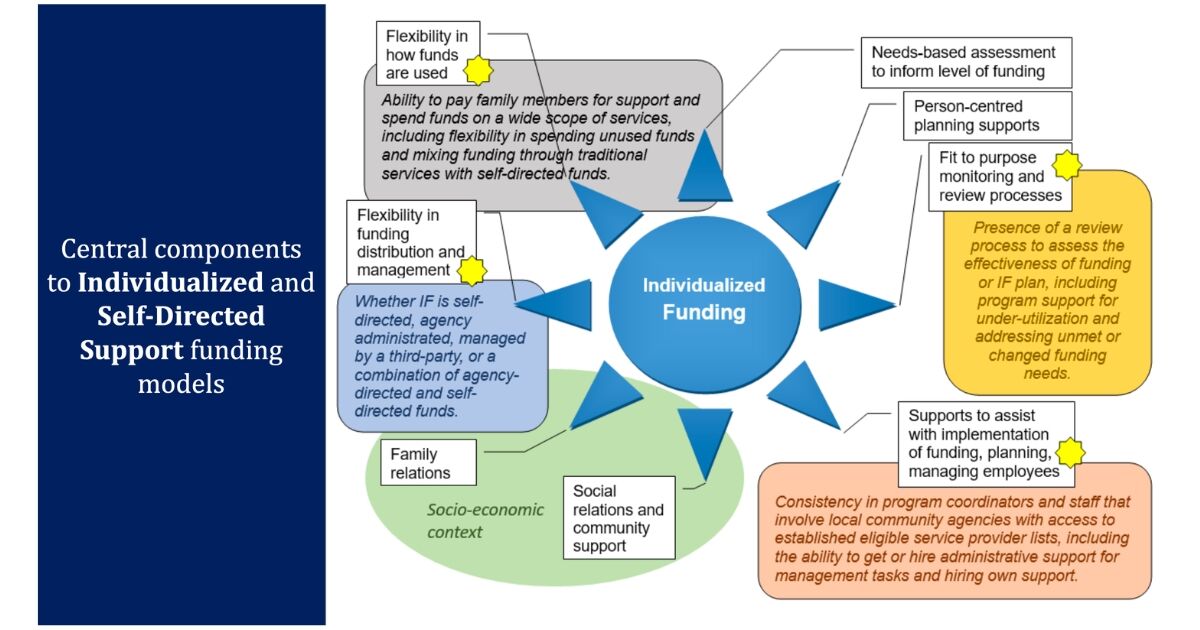
Individualized Funding (IF) refers to funding allocated directly to a person with disability, or to a parent, guardian, family member, or trusted representative, to meet disability-related support needs.
In 2024 the Canadian Institute for Inclusion and Citizenship (CIIC) at The University of British Columbia published Individualized Funding and Supports: A Scoping Review examining international peer-reviewed literature on individualized funding models for people with disabilities/support needs, families, carers, service providers, support workers, and policy systems. The review included 347 peer-reviewed articles published between 2011 and 2023, including 318 primary research studies and 29 knowledge syntheses. The largest body of literature focused on Australia, followed by the United Kingdom, the United States, international/comparative literature, Europe, Canada, and New Zealand.
In 2026 the Review was updated and identified a further 125 articles for extraction. Across both the 2024 review and the updated literature search, the central message is consistent that individualized and self-directed funding mechanisms can support choice and control, but choice and control are not produced by funding alone.
The findings were presented by Laura Mudde at the Global Leadership Exchange Match event with the SDS Network in June 2026, hosted by Karis Disability Services in Ottawa.
Read and download the 2024 and 2026 Scoping Reviews, and the presentation in your browser, links below.
The publisher is CIIC. Individualized Funding and Self-Direction © Timothy Stainton, Rachelle Hole and Laura Mudde 2026.